VIN lookup
Explore our tools
People / NameFind someone by nameSocial Media SearchFind profiles using a usernamePhoneFind information linked to a phone numberEmail LookupFind profiles linked to an email addressCompany SearchFind company informationVINResearch a vehicle by VINPhotoFind where a photo appears onlinePhoto locationFind where a photo was taken
Built for every kind of search
Your always-on AIvehicle research partner
Decode VIN 1HGCM82633A004352.
The VIN structure decodes to a 2003 Honda Accord built in the United States. A VIN lookup does not reveal the private owner.
What should I verify next?
Compare the decoded model, engine, and check digit with the vehicle and its documents, then review public recall records.
Here is the decoded vehicle summary:
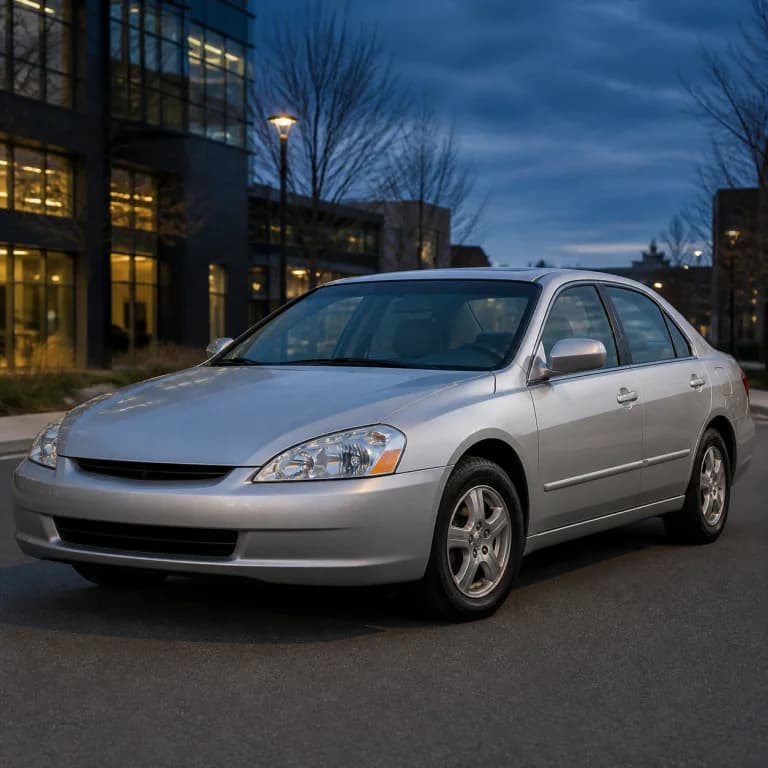
Decoded VIN2003 Honda Accord
Vehicle specificationsDoes this prove the car's condition or ownership?
No. The VIN describes the vehicle configuration. Condition, title history, and ownership require separate authoritative records.
Decode VIN 1HGCM82633A004352.
The VIN structure decodes to a 2003 Honda Accord built in the United States. A VIN lookup does not reveal the private owner.
When a VIN lookup helps
Before buying a used car
Confirm the year, trim, engine and build details match the listing - and check for open recalls - before you pay.
Verify a listing
Decode the VIN from a marketplace ad to make sure the specs line up with what the seller claims.
Check for open recalls
See whether the vehicle has unrepaired safety recalls on file with NHTSA so you can get them fixed for free.
Look up safety ratings
Review the official NHTSA crash-test ratings for the model before you buy or drive.
Decode your own car
Pull the exact factory specs for your vehicle - useful for parts, insurance, or selling.
Confirm the build details
Manufacturer, assembly plant, drivetrain and equipment all come from the VIN's encoded factory data.
What you can find
Seventeen characters, fully decoded.
Recall campaigns, named and dated.
Crash ratings and the drivetrain as built.
- Year, make, model & trim
- Engine & drivetrain
- Body type & doors
- Open safety recalls
- NHTSA crash-test ratings
- Assembly plant & origin
- Fuel type & cylinders
- Typical market context
Specs, recalls and safety ratings come straight from official NHTSA data - clearly sourced.
Public vehicle information only. Not a consumer report - don't use it for credit, insurance, or eligibility decisions.
Unlock the full profile
$19/month
$190/year · cancel anytime
- Full factory spec decode for the VIN
- Open NHTSA recalls and remedies
- Official NHTSA crash-test ratings
- Market context for the make and model
- A source link for every detail
27+
Spec fields decoded per VIN
The seller listed one trim, but the VIN decode showed a different engine package. I caught it before driving across town to see the car.
The VIN settled which drivetrain the car actually had. I ordered the correct part instead of relying on the listing description.
I checked my own VIN and found an open recall I had missed. The report linked straight back to the official NHTSA details.
I compared two used cars and found an open recall on one of them. The official source made the next question for the seller easy.
The factory specifications were much more precise than the ad. It helped me verify the model before paying for an inspection.
Frequently asked questions
Where does the vehicle data come from?
Specifications, recalls, and safety ratings come from the U.S. National Highway Traffic Safety Administration (NHTSA) - official, public government data. Every detail links back to its source.
Does this include accident or title history?
The core report covers factory specs, open recalls, and safety ratings from NHTSA. Title, accident, odometer, and theft history come from separate vehicle-history providers and are shown only where that data is available.
What is a VIN and where do I find it?
A VIN is the 17-character Vehicle Identification Number unique to each vehicle. Find it on the dashboard near the windshield, the driver's-side door jamb, or your registration and insurance documents. It never contains the letters I, O, or Q.
Is this a vehicle background check?
It surfaces public vehicle information only. DeepSearch is not a consumer-reporting agency and this is not an FCRA report - don't use it for credit, insurance, or eligibility decisions.
Will the lookup always find everything?
Decoding depends on what the manufacturer encoded in the VIN and what NHTSA has on file. Older or imported vehicles may decode with fewer details. Missing fields simply mean the data isn't available, not that something is wrong.